


The Spiritual Meaning of Hajj: What Every Muslim Should Know
Introduction
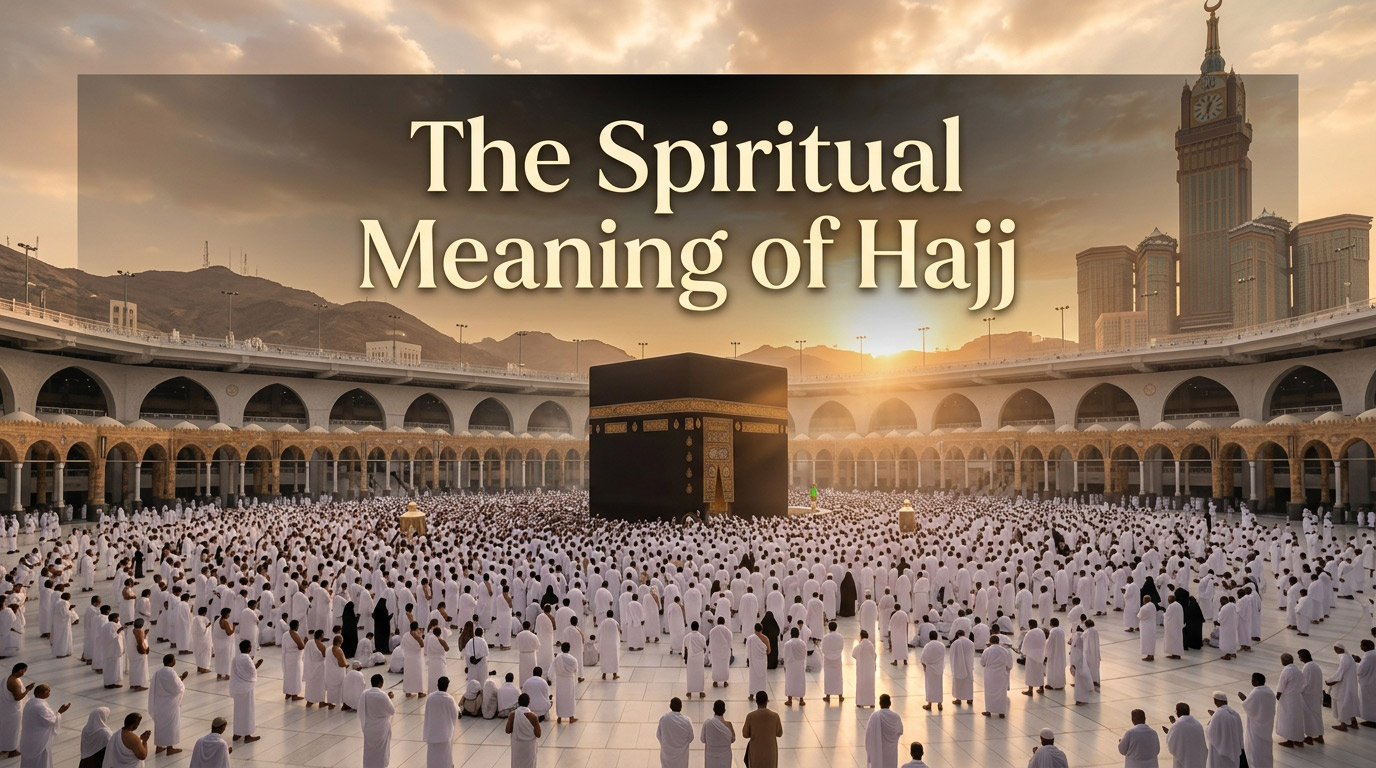
Every year, pilgrims leave behind their homes, comforts, and identities to answer the call of Allah. They dress in two simple white cloths. They move through ancient rites in places where prophets once walked.
And something happens to them.
People who have performed Hajj describe it in ways that resist ordinary language. They speak of weeping without knowing why. Of feeling seen by Allah in a way they had never felt before. Of returning home as if they had been remade.
Hajj is the fifth pillar of Islam, obligatory once in a lifetime for every Muslim who is physically and financially able. But understanding why it is so powerful requires going beyond the rituals themselves — into the meaning that lives beneath them.
Because Hajj is not merely a physical pilgrimage.
It is a journey of the soul.

What Hajj Actually Is
Hajj takes place during the first thirteen days of Dū al-Hijjah, the final month of the Islamic calendar. It is a series of connected acts of worship, each one layered with meaning, each one rooted in the history of the prophets.
Pilgrims enter a state of ihram; a sacred state of purity and intention, before even arriving in Makkah. They perform Tawaf, circling the Kaaba seven times. They walk between the hills of Safa and Marwa, retracing the steps of Hajar as she searched for water for her son Ismail. They stand on the plains of Arafah in the most important moment of the pilgrimage. They spend nights in Muzdalifah under the open sky. They cast pebbles at the Jamaraat. They sacrifice. They shave their heads. They return to Makkah for a final Tawaf.
Each act carries a story. Each story carries a lesson. And the lessons, taken together, form a complete picture of what it means to be a servant of Allah.
“And proclaim to the people the Hajj; they will come to you on foot and on every lean camel; they will come from every distant pass.”
— Surah Al-Hajj (22:27)
The Meaning of Ihram
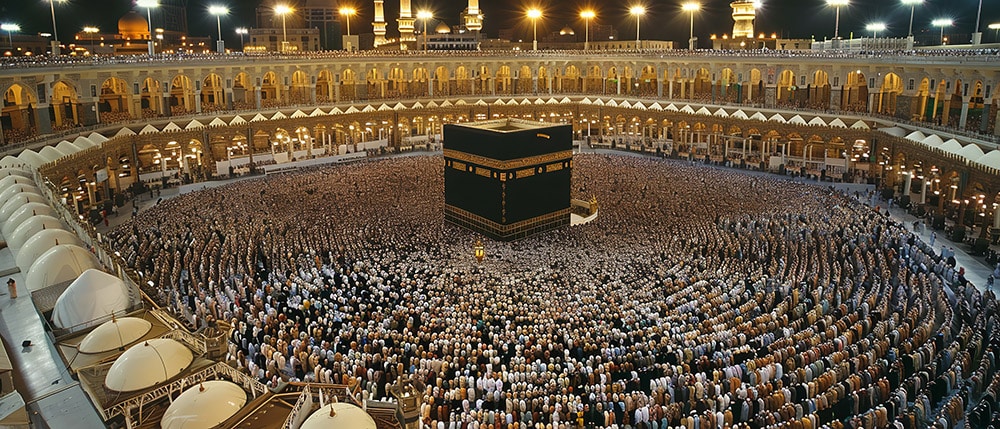
Before a pilgrim can enter Makkah, they must enter ihram — removing their ordinary clothes and donning two simple, unstitched white garments.
It is one of the most visually striking moments in Hajj. In an instant, the professor and the farmer look the same. The wealthy businessman and the struggling laborer are indistinguishable. The differences of nationality, language, profession, and status dissolve.
What remains is only what matters: a soul standing before its Creator.
There is also something deliberately humbling about the garments themselves. They are simple, white, and unsewn, resembling the shroud a person is wrapped in at death. This is not accidental.
Ihram is a rehearsal for the Day of Judgment. A reminder that the world we have decorated ourselves with; our possessions, our reputations, our carefully constructed identities, will one day fall away. What will remain is only our deeds and our sincerity.
Ihram invites the pilgrim to begin dying to the self, so that they can arrive fully before Allah.
Tawaf: Orbiting Allah
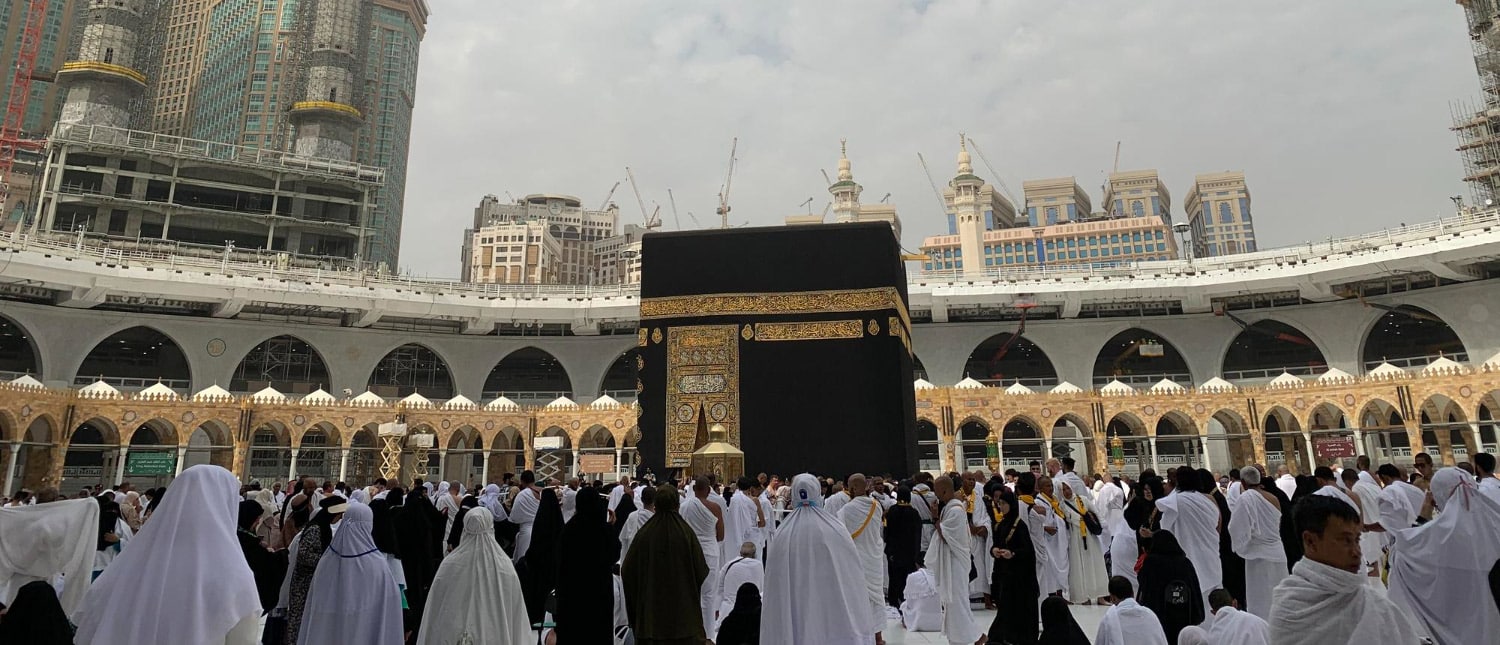
When a pilgrim first lays eyes on the Kaaba, something unexpected often happens. Many weep. Many feel overwhelmed. Many find themselves unable to speak.
The emotion does not come from the stones of the Kaaba itself, but from what it represents: the House dedicated to the worship of Allah alone.
The Kaaba, the cubic structure draped in black and gold at the heart of Masjid al-Haram, is not worshipped. It is a qiblah: a direction of unity, a physical reminder of the One toward whom all worship is directed.
Tawaf, the act of circling it seven times in a counterclockwise direction, carries a profound symbolic weight. Every worshipper moves in the same direction, around the same center, as a single community.
Like planets orbiting the sun. Like electrons around a nucleus. Like all of existence revolving around its Source.
The pilgrim who performs Tawaf is not circling a building. They are expressing, in movement and in breath, a fundamental truth: that their life orbits Allah. That He is the center around which everything else is arranged.
“Whoever performs Tawaf around this House seven times and keeps count of it, it will be as if he has freed a slave.”
— Sunan Ibn Majah
Sa’i: The Lesson of Hajar (AS)
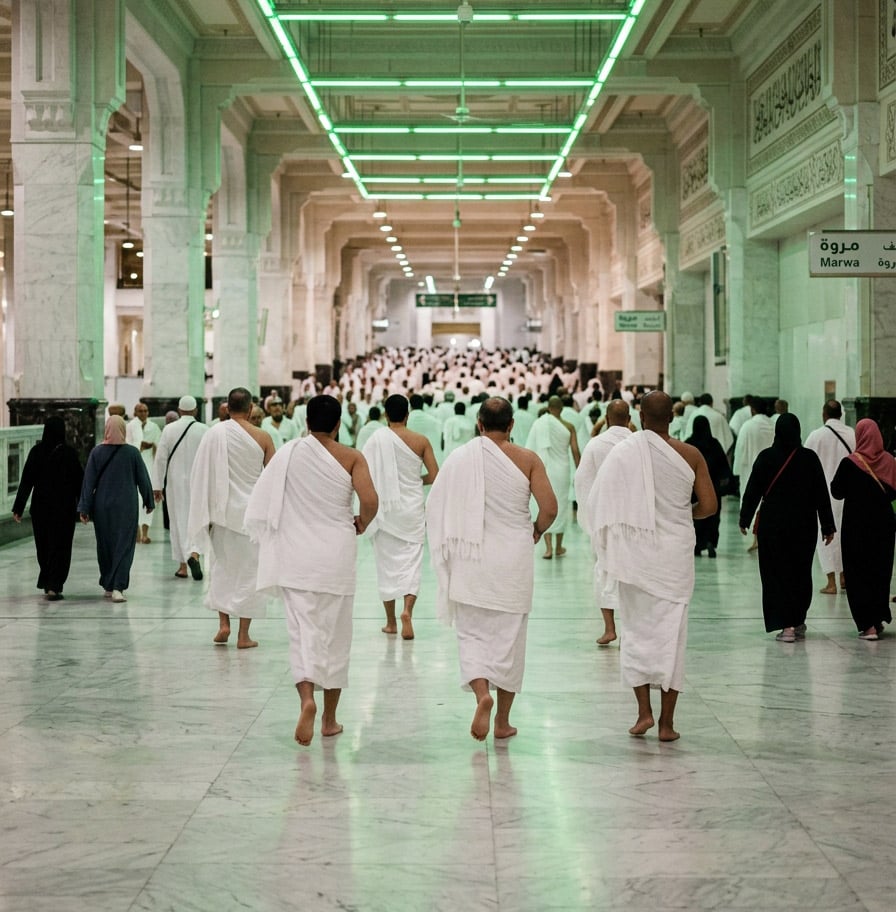
Between the hills of Safa and Marwa, pilgrims walk back and forth seven times. This act called Sa’i, reenacts one of the most moving stories in Islamic tradition.
Hajar (AS), the wife of Ibrahim (peace be upon him), was left alone in the desert with her infant son Ismail. With no water and no help in sight, she ran between the two hills, searching desperately for any sign of relief.
She did not sit down and despair. She moved. She searched. She kept going.
And Allah answered her.
The spring of Zamzam, which still flows today, thousands of years later, burst forth beneath the feet of her child. It became a source of life for generations, and eventually the foundation around which a civilization grew.
When a pilgrim performs Sa’i, they are not merely commemorating history. They are embodying a lesson: that tawakkul trust in Allah, is not passivity. It is effort combined with surrender. It is doing everything within your ability, and then trusting that Allah will do what you cannot.
Hajar’s steps became worship. So do yours.
Arafah: Where the Heart Opens
Of all the rites of Hajj, none carries more weight than the standing on the plains of Arafah.
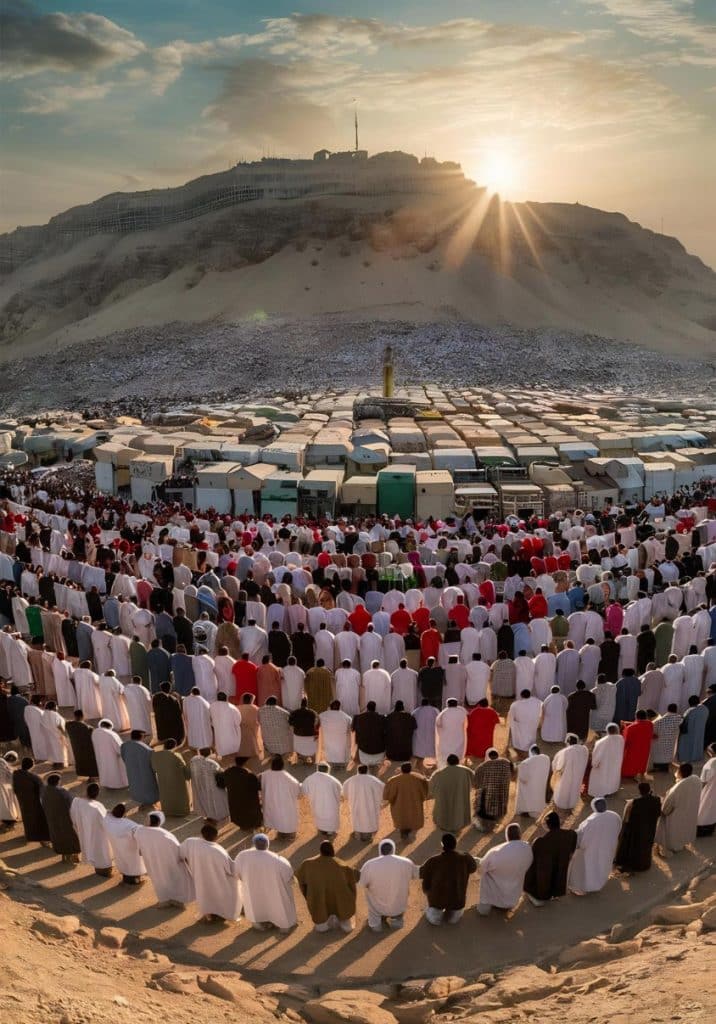
The Prophet ﷺ said: “Hajj is Arafah.” In a single phrase, he captured something immense. The entire pilgrimage, with all its rites and meanings, converges on this one afternoon.
On the 9th of Dū al-Hijjah, pilgrims gather on a vast, open plain. There is no roof. No shade from a cathedral. No protective structure of any kind. Just the earth beneath their feet and the sky above their heads.
And they stand. And they ask. And they weep.
For hours, they make dua with an urgency and honesty that most people reserve only for their most desperate moments. Old wounds surface. Long-held regrets emerge. The weight of a life; its choices, its failures, its unlived possibilities, rises to the surface.
And Allah answers.
“There is no day on which Allah frees more people from the Fire than the Day of Arafah. He draws near and then boasts of them to the angels, saying: “What do these people want?”
— Sahih Muslim
Arafah is the closest most human beings will ever come to experiencing something like the Day of Judgment while still in this life. Gathered in one place. Stripped of distinctions. Answerable to no one but Allah.
It is terrifying and beautiful in equal measure.
The Sacrifice of Ibrahim
At the center of Hajj is the story of Ibrahim (peace be upon him). His life was a series of tests, and he passed every one of them. He left his homeland. He rebuilt the Kaaba. He raised his family in obedience to Allah.
But the test that defines Eid al-Adha, and echoes through every Hajj was the command to sacrifice his own son.
Ibrahim obeyed. And at the moment of completion, Allah stayed his hand and replaced his son with a ram. The sacrifice had already been accepted, not because of the blood that was shed, but because of the surrender that had taken place in the heart.
“Their meat will not reach Allah, nor will their blood, but what reaches Him is piety from you.”
— Surah Al-Hajj (22:37)
This is the deepest lesson of Hajj. Allah is not asking for our possessions. He is not asking for our suffering. He is asking for our hearts.
He is asking: what are you willing to surrender? What do you hold so tightly that it has become a wall between you and Allah?
For some, it may be pride. For others, a relationship, a fear, a habit, or the endless pursuit of status and approval.
Hajj forces the believer to confront what stands between the heart and Allah — and asks whether they are truly willing to let it go.
The sacrifice of Eid al-Adha is a physical expression of a spiritual question that Hajj poses to every pilgrim. And the honest answer to that question is the beginning of real transformation.
Returning Home
When a pilgrim completes Hajj and returns home, they are described in the tradition as being like a newborn, cleansed of their sins, given a fresh beginning.
“Whoever performs Hajj for the sake of Allah and does not commit any obscenity or wrongdoing will return as if he were the day his mother bore him.”
— Sahih al-Bukhari & Sahih Muslim
But the transformation of Hajj is meant to be permanent, not temporary. The pilgrim who returns to the same patterns they left behind has not fully received the gift.
Hajj changes your relationship with time. You understand, in your body, that this life is short and the next life is real.
It changes your relationship with people. You have stood beside strangers from every corner of the earth and recognized in them your brothers and sisters.
It changes your relationship with yourself. You have been stripped of pretense, and you have survived it. You have wept before Allah, and you were not destroyed. You were made whole.
The pilgrim carries the plains of Arafah home with them.
They carry the Kaaba in their heart.
They carry the memory of who they were when they stood before Allah with nothing but sincerity.
For Those Who Have Not Yet Gone
Not every Muslim has been able to perform Hajj. Some are waiting for the financial means. Some are waiting for health. Some are waiting for the opportunity that has not yet come.
The longing itself is a form of worship.
The scholars teach that a sincere intention; a genuine desire to perform Hajj when one is able, carries its own reward with Allah. He knows what you carry in your heart. He knows the dua you have made. He knows the hope you hold.
And while you wait, you can still enter the spirit of Hajj during Dū al-Hijjah. Fast on the Day of Arafah. Increase your dhikr. Give in charity. Make the kind of dua that pilgrims make on the plains.
“And whoever leaves his home as an emigrant to Allah and His Messenger and then death overtakes him, his reward has already become incumbent upon Allah.”
— Surah An-Nisa (4:100)
Allah judges by intention. The journey begins in the heart, long before the plane is boarded or the ihram is worn.
If Hajj is in your heart, it is already, in some way, yours.

Stay Spiritually Connected
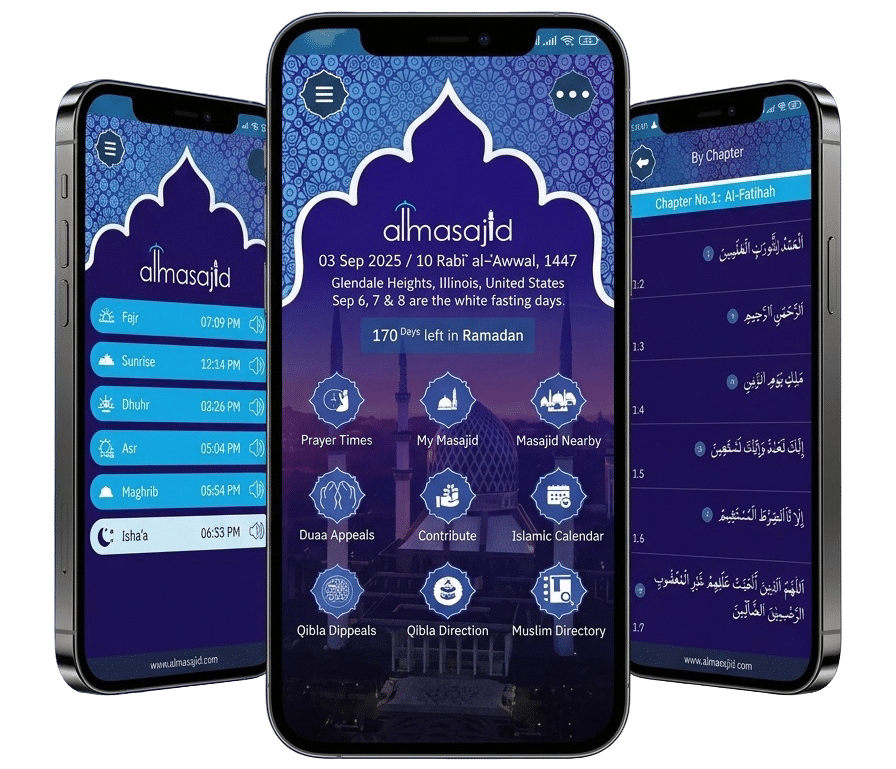
In a world filled with distractions, finding moments of spiritual connection has become more important than ever. allMasajid helps Muslims stay connected through:
- Accurate Prayer Times
- Quran & Duas
- Qibla Direction
- Islamic Calendar
- Nearby Masajid
- Community Features
- Spiritual Reminders
Whether during Hajj, Ramadan, or the quiet moments of everyday life, allMasajid is designed to help Muslims stay spiritually connected and closer to Allah.


A Final Reflection
Hajj is one of the most powerful reminders Allah has placed in the structure of Islam, a reminder that we are not merely individuals managing our private lives, but members of a global community, connected through faith and history and the love of one God.
Whether you are among the pilgrims this year or watching from afar, these days carry something for you. The invitation is open. The mercy is real. The doors have not closed.
May Allah grant every Muslim who yearns for Hajj the opportunity to make the journey.
May He accept it from those who go.
And may He fill the hearts of those who remain with the spirit of the pilgrimage.
May your Hajj be accepted.
May your sins be forgiven.
May your heart return lighter than when it left.
Ameen.