

The Day of Arafah
Mercy, Forgiveness, and the Gift of Return
A reflection on one of the most sacred days in Islam — a day of divine compassion, forgiveness, and returning to Allah.
Introduction
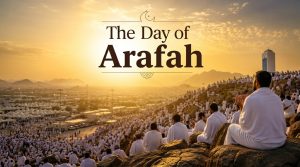
Every year, millions of Muslims gather beneath the open sky on the plains of Arafah.
Dressed in simple white garments, they stand shoulder to shoulder; praying, reflecting, and turning their hearts toward Allah with hope that transcends language and borders.
There are no titles there. No status. No wealth. No worldly distractions.
Only humanity standing before its Creator.
And perhaps that is what makes the Day of Arafah so powerful.
It is a reminder that no matter where we come from, how much we own, or how heavy our hearts may feel, every soul stands equal before Allah.
But the beauty of Arafah is not limited to those physically performing Hajj. Even if you are thousands of miles away, this sacred day still carries immense blessings for you.
Your prayers can still rise. Your tears can still be seen. Your repentance can still be accepted.
The Day of Arafah is not just a date on the Islamic calendar.
It is a day of divine compassion. A day of forgiveness. A day of returning to Allah.
A Day Unlike Any Other
The Day of Arafah falls on the 9th of Dū al-Hijjah, just before Eid al-Adha, and is considered one of the most sacred days in Islam. It is the heart of Hajj. For pilgrims, standing in Arafah is the most important pillar of the pilgrimage – the moment where millions gather in humility, seeking closeness to their Lord.
But for Muslims around the world, Arafah remains deeply significant even from afar. It is the day on which Allah completed His favor upon humanity.
“This day I have perfected for you your religion and completed My favor upon you and have approved for you Islam as religion.”
— Surah Al-Ma’idah (5:3)
There is something deeply moving about knowing that such a powerful day returns every year; a day where the doors of divine kindness open wider than usual.
A day where hearts soften. A day where prayers feel closer to the heavens.
The Gifts of This Day
The Prophet Muhammad ﷺ spoke of Arafah in ways that stop the heart.
“There is no day on which Allah frees more people from the Fire than the Day of Arafah.” — Sahih Muslim |
A single day. Countless souls freed. Hearts broken by years of distance from Allah made whole again.
That is not a small thing. That is everything.
For those not performing Hajj, fasting this day is among the greatest acts of worship a believer can offer.
“Fasting the Day of Arafah expiates the sins of the previous year and the coming year.”
— Sahih Muslim
Two years of sins forgiven through one sincere fast; a generosity from Allah that the mind struggles to fully grasp.
But fasting on Arafah is not merely about hunger. It is about pausing from distraction, resetting the heart, and returning to Allah with every part of yourself.
The day carries a unique calmness. A quiet spiritual weight. It becomes easier to reflect, easier to make dua, easier to remember what truly matters.
Many of us carry burdens silently.
Mistakes we regret. Prayers we delayed. Moments we wish we could undo.
Arafah is a reminder that Allah’s compassion is always greater than our shortcomings, and that the path back is never closed, no matter how long we have been away.
Standing Before Allah
On the plains of Arafah, millions stand beneath the same sky.
Rich and poor. Young and old. Arab and non-Arab.
All distinctions disappear.
There is no luxury there. No competition. No appearance to maintain.
Only sincerity. Only worship. Only hope.
The simplicity of Arafah teaches something powerful: that true success is not found in worldly achievements, but in closeness to Allah.
For one day, the world becomes quiet. And the soul finally speaks.