


NEWSLETTER SUBSCRIPTION


Understanding the Hijri Calendar

How Islamic Time Works
A complete guide to the lunar calendar that governs Islamic worship, sacred months, and spiritual rhythms. By allMasajid Editorial Team

Introduction

Every culture measures time differently. Some by the sun. Some by both. But Muslims measure time by the moon — and that choice is not incidental.

The Hijri calendar, the Islamic lunar calendar, is more than a system of dates. It is a theological statement. It declares that time itself belongs to Allah, and that the rhythms of worship should follow the heavens He created, not the convenience of human invention.

Yet for many Muslims, the Hijri calendar remains something of a mystery. They know Ramadan by the crescent moon and Eid by the announcement — but the deeper logic of how Islamic time works, why the calendar moves through the Gregorian year, and what each month actually carries, often remains unexplored.

That is what this guide is for.

What Is the Hijri Calendar?

The Hijri calendar is a purely lunar calendar; it tracks time by the cycles of the moon, not the sun. Each month begins with the sighting of the new crescent moon, and each month is either 29 or 30 days long, depending on the moon’s cycle.

A Hijri year contains 354 or 355 days, about 11 days shorter than a Gregorian solar year. This means the Islamic calendar does not stay fixed to the seasons. Over time, the months drift through every part of the solar year. Ramadan may fall in summer one decade and winter the next.

“He it is Who made the sun a shining brightness and the moon a light, and ordained for it mansions that you might know the computation of years and the reckoning.”
— Surah Yunus (10:5)

Allah explicitly mentions the moon as a means of measuring time. The Hijri calendar is not a cultural relic, it is rooted in Quranic guidance.

Why Is It Called the Hijri Calendar?

The calendar takes its name from the Hijrah — the historic migration of the Prophet Muhammad ﷺ from Makkah to Madinah in 622 CE. This event was chosen as the starting point of the Islamic calendar by the second Caliph, Umar ibn al-Khattab (may Allah be pleased with him), after consultation with the Companions.

It is a remarkable choice. The Companions did not choose the year of the Prophet’s birth, or the year revelation began. They chose the year of movement. Of the community. Of leaving security behind for something more true.

Islamic time begins not with a person’s birth, but with a community’s commitment.

The Twelve Months of the Hijri Year

The Hijri calendar has twelve months, each with its own character, history, and in some cases, specific acts of worship:

# Month Significance
1 Muharram Sacred Sacred month; contains the Day of Ashura — expiation for the previous year.
2 Safar The name means 'empty' — historically caravans left homes empty during travel.
3 Rabiʼ al-Awwal The month in which the Prophet ﷺ was born and, later, returned to his Lord — making it a month of both gratitude and reflection.
4 Rabiʼ al-Thani The second 'spring' month; a time of continued reflection.
5 Jumada al-Awwal The name reflects the beginning of the dry season in ancient Arabia.
6 Jumada al-Thani The second dry month; quiet in terms of specific worship observances.
7 Rajab Sacred Traditionally associated by many Muslims with the Israʼ and Miʼraj, although the exact date of the event is not definitively established in authenticated hadith literature.
8 Shaʼban The Prophet ﷺ would fast extensively in this month — a preparation for Ramadan.
9 Ramadan The month of fasting; the Quran was revealed; Laylat al-Qadr falls within it.
10 Shawwal Eid al-Fitr is on the 1st; six optional fasts in Shawwal carry great reward.
11 Dhū al-Qaʼdah Sacred A sacred month; one of the months in which Hajj preparation begins.
12 Dhū al-Hijjah Sacred The month of Hajj; the first ten days are among the most virtuous of the year.

The Four Sacred Months

Four of the twelve months are designated by Allah as sacred: Muharram, Rajab, Dū al-Qa’dah, and Dū al-Hijjah. Their sanctity predates Islam — the Arabs of the pre-Islamic era honoured these months as times of peace, during which warfare was forbidden and sacred travel was protected.

“Indeed, the number of months with Allah is twelve months in the register of Allah from the day He created the heavens and the earth; of these, four are sacred.”
— Surah At-Tawbah (9:36)

Islam did not introduce the sacred months from a vacuum; it inherited, purified, and elevated them. Scholars explain that good deeds in these months carry greater reward, and sins carry greater weight. They are times of heightened spiritual sensitivity.

In a sacred month, the scales are more sensitive — in both directions.

Why Does the Islamic Calendar Move?

One of the most common questions Muslims have about the Hijri calendar is this: why does Ramadan fall in summer some years and winter others? Why doesn’t the Islamic calendar stay fixed?

The answer lies in the difference between the lunar and solar year.

Because the Hijri year is approximately 11 days shorter than the Gregorian year, Islamic months advance through the Gregorian calendar by about 11 days each year. Over a 33-year cycle, every Islamic month will have passed through every season.

This is not a flaw in the system. It is a feature.

It means that over a Muslim’s lifetime, they experience fasting in summer heat and winter cold. Long days and short. Ease and difficulty. The worship of Allah is not tied to one climate or one convenience — it travels with the community through all seasons of life.

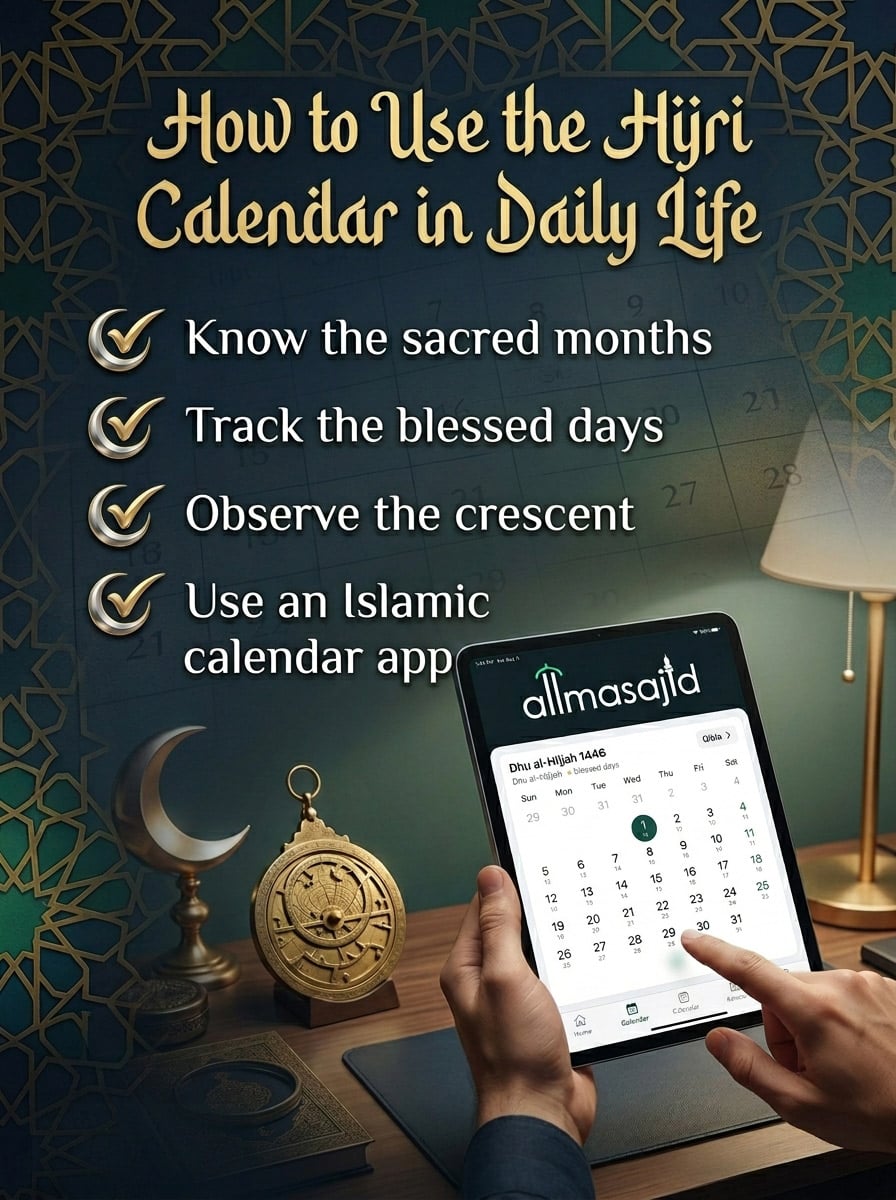
How to Use the Hijri Calendar in Daily Life

For many Muslims, engaging with the Hijri calendar is a way of staying connected to the spiritual pulse of the Islamic year. Here are some practical ways to bring it into your life:

  • Know the sacred months: Note when Muharram, Rajab, Dū al-Qa’dah, and Dū al-Hijjah fall this year, and approach them with greater mindfulness in your deeds.
  • Track the blessed days: The 9th and 10th of Muharram (Ashura), the first ten days of Dū al-Hijjah, and the middle of Sha’ban are among the most spiritually significant days in the year.
  • Observe the crescent: Make a habit of looking for the new moon at the start of each month. It connects you to the rhythm of Islamic time in a tangible, beautiful way.
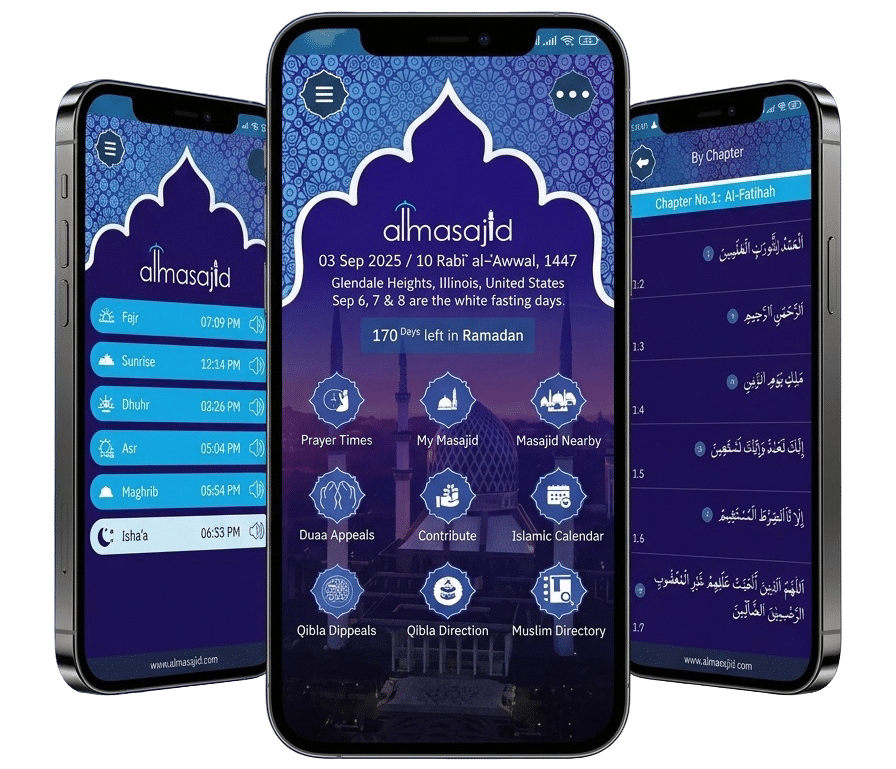
  • Use an Islamic calendar app: Tools like allMasajid track the Hijri date, alert you to upcoming Islamic events, and help you plan fasts and worship around the lunar calendar.
  • Teach your children: When a child learns that Ramadan falls in different seasons because of the moon, they begin to understand that Islamic worship is not seasonal or occasional — it belongs to all of life.
allmasajid

Stay Spiritually Connected

Track the Islamic calendar, prayer times, and more — all in one place.

  • Accurate Prayer Times
  • Islamic Calendar & Hijri Dates
  • Qibla Direction
  • Quran & Duas
  • Nearby Masajid
  • Spiritual Reminders

A Final Reflection

In a world that runs on calendars built around economic cycles, school terms, and quarterly reports, the Hijri calendar offers something different.
It offers a year structured around worship. Around remembrance. Around the natural movements of the heaven that Allah created as a sign for those who think.
To know the Hijri calendar is not merely a matter of knowing when Eid falls. It is a way of inhabiting Islamic time — of living in a year that is shaped by fasting and remembrance and pilgrimage, rather than productivity and profit.

May every month you live in the Hijri year bring you closer to Allah.
May the moon that marks the beginning of each month be a reminder that time, like all things, belongs to Him.
Ameen.

Logo

: P.O. Box 87553
Carol Stream IL 60188

: (+1) 872-267-2253

: info@allMasajid.com

Newsletter

allMasajid Apps

Copyright © 2026. All rights reserved | Disclaimer | Copyright Privacy Policy