


Muharram
The Sacred Month, Ashura, and the Islamic New Year
Introduction
Every new year arrives with a question, whether we hear it or not.
What do you want this year to be different?
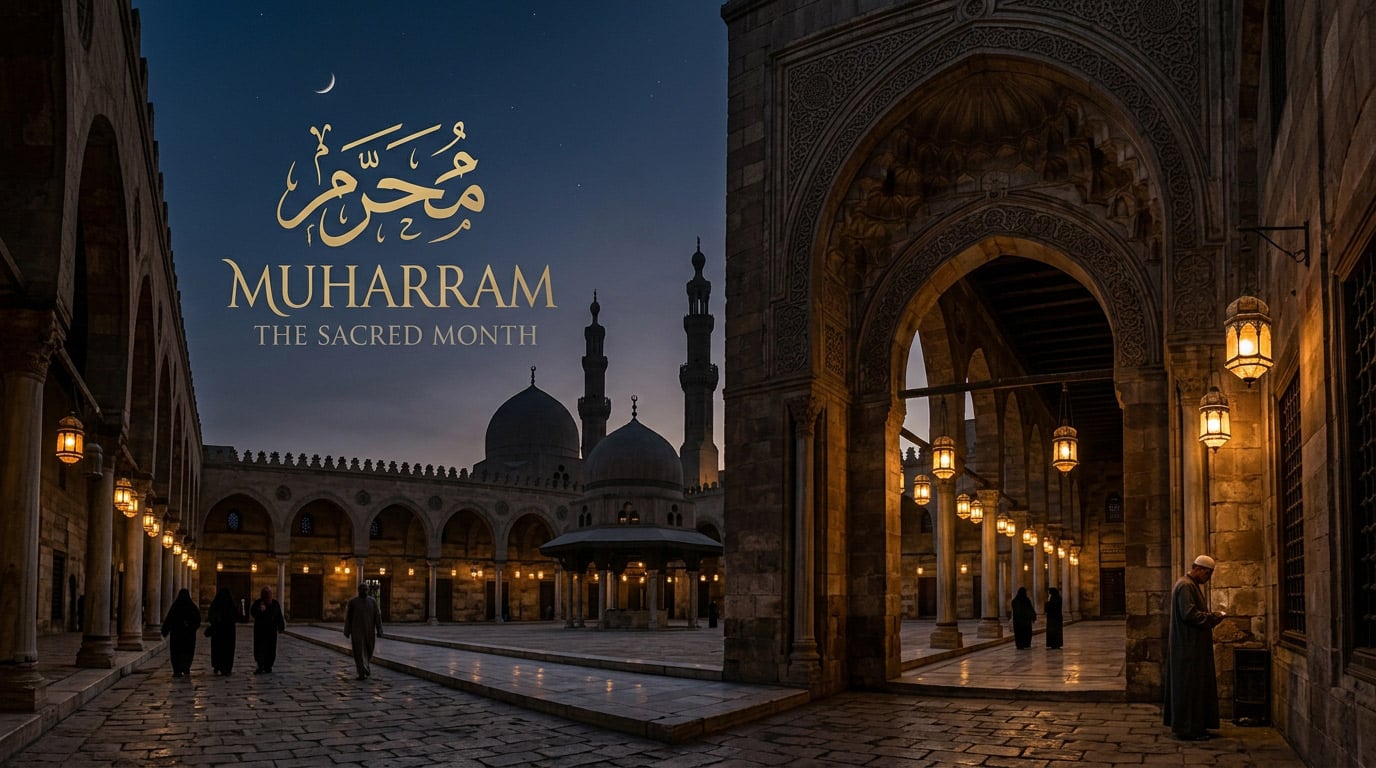
For Muslims, the Islamic New Year 2026 begins not with fireworks or countdowns, but with the arrival of Muharram — the first month of the Hijri calendar, and one of the four sacred months in Islam designated in the Quran itself. It is the month that carries the Day of Ashura fasting, the memory of divine rescue, and a quiet call to reflect on the Islamic New Year meaning before the year truly begins.
It is a quiet beginning. Intentional. Weighted with history and spiritual significance that most people have never fully explored.
Muharram 2026 does not demand grand gestures. It offers something rarer: an invitation to pause, reflect, and choose, with renewed clarity, what kind of year lies ahead. Why do Muslims fast on Ashura? What does this sacred month actually call us toward? This article explores both.
The Islamic year does not begin with celebration. It begins with remembrance.
And perhaps that is exactly right.

What Is Muharram?
Muharram is the first month of the Islamic lunar calendar — the month from which all of Islamic time is counted. Its name comes from the Arabic root meaning “forbidden” or “sacred,” and it carries that designation directly from Allah.
“Indeed, the number of months with Allah is twelve months in the register of Allah from the day He created the heavens and the earth; of these, four are sacred.”
— Surah At-Tawbah (9:36)
Muharram is one of those four. The others are Dhul Qa’dah, Dhul Hijjah, and Rajab. But Muharram holds a distinction among them — it is the only one the Prophet Muhammad ﷺ called “Shahr Allah,” the Month of Allah.
That title alone says something. When something is attributed to Allah directly — the way the Kaaba is called the House of Allah, the way the she-camel in the story of Salih is called the she-camel of Allah — it signals an honour that goes beyond ordinary significance.
Muharram is not just the first month on a calendar. It is a month held close by Allah.

The Day of Ashura
“Fasting the Day of Ashura — I hope that Allah will accept it as expiation for the year that came before.” — Sahih Muslim
One fast. A means through which Allah may forgive the minor sins of the previous year. It is the kind of divine generosity that the mind struggles to contain.
The Prophet ﷺ also intended to fast the 9th alongside the 10th, to distinguish the Muslim practice from that of others. He passed away before the following Ashura, but the scholars have preserved this as a recommended practice: fast the 9th and 10th together, or the 10th and 11th.
The fast of Ashura is not merely about going without food. It is about gratitude — for rescue, for mercy, for the thread of divine intervention that runs through all of human history.
The Story Behind the Fast
It is worth sitting with the story that Ashura commemorates.
Musa and the Children of Israel were trapped. Pharaoh’s army was behind them. The sea was ahead. There was, by any human calculation, no way out.
And then Allah parted the sea.
Not before they reached the water’s edge. Not with plenty of time to spare. At the exact moment of what seemed like the end.
There is something in that timing that speaks to every believer who has ever felt cornered. Every person who has prayed and waited and wondered if the answer would ever come.
Ashura is an annual reminder: it came. It always came. And it still does.
“And We took the Children of Israel across the sea, and Pharaoh and his soldiers pursued them in tyranny and enmity until, when drowning overtook him, he said, I believe that there is no deity except that in whom the Children of Israel believe.”
— Surah Yunus (10:90)
We fast on Ashura not out of sorrow, but out of gratitude. Gratitude that Allah rescues. That He hears. That His timing, though sometimes incomprehensible, is always exact.
A Month of Sacred Boundaries
In the tradition of the sacred months, Muharram carries a specific spiritual weight — not just in its blessings, but in its call to restraint.
The sacred months were honoured even before Islam. The Arabs observed them as times of peace, when warfare was suspended and disputes were set aside. Islam affirmed and elevated this understanding.
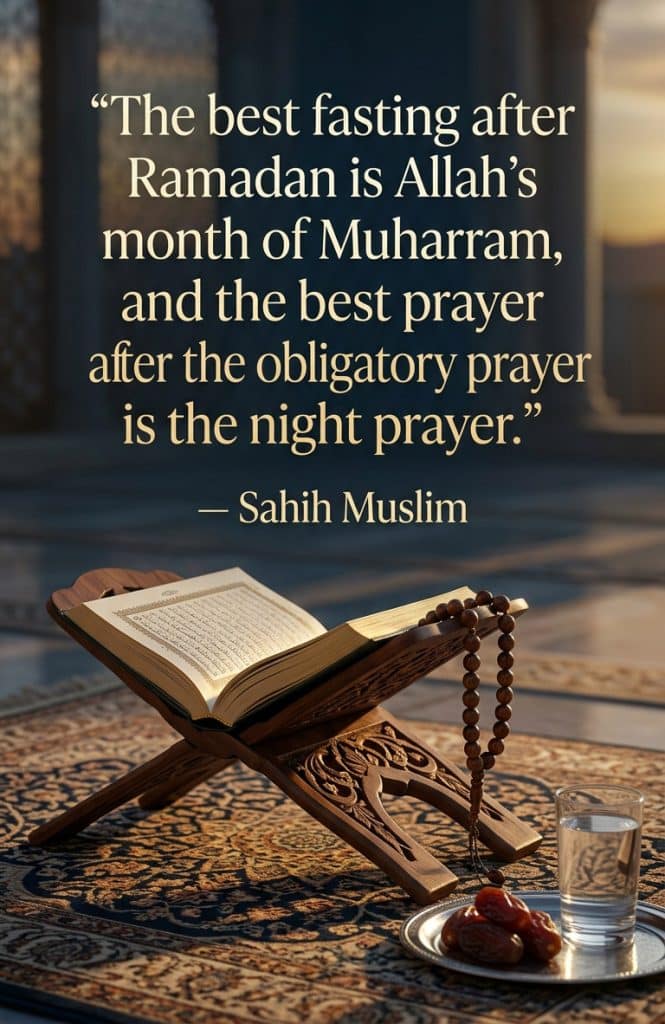
“The best fasting after Ramadan is Allah’s month of Muharram, and the best prayer after the obligatory prayer is the night prayer.”
— Sahih Muslim
The Prophet ﷺ elevated fasting in Muharram — the entire month, not just Ashura — as the most virtuous voluntary fast after Ramadan itself. This is a statement about the quality of time that Muharram carries.
In a sacred month, sins carry greater weight. But so do good deeds. The scales, in both directions, are more sensitive.
This is not meant to cause fear. It is meant to create awareness.
Muharram is a month that asks you to be a little more careful. A little more intentional. A little more present.
A New Year Unlike Any Other
The Islamic New Year does not come with the cultural weight that other new years carry — no mandatory gatherings, no pressure to celebrate, no fireworks.
And that absence is actually a gift.
It leaves space for something more honest: a quiet accounting of the year that passed, and a sincere intention for the one beginning.
The Hijri calendar begins not with a birth, but with a migration. The Hijra — the Prophet’s ﷺ journey from Makkah to Madinah — marks the starting point from which Islamic time is measured. It was chosen by the Companions not as the year the Prophet was born, nor the year revelation began, but the year the Muslim community moved together toward something new.
There is a lesson in that choice.
Time, in Islam, is marked by movement. By intention. By the willingness to leave what is comfortable for what is right.
Every Muharram carries that spirit forward. It asks: what are you moving toward this year?
How to Honour This Month
Muharram does not ask for perfection. It asks for attention.
Begin with the fast of Ashura on the 10th of Muharram, pairing it with the 9th or 11th as the Prophet ﷺ intended. Approach it not as a ritual to tick off, but as an act of gratitude for every rescue Allah has already granted you — the ones you noticed, and the ones you didn’t.
If you can manage more fasting throughout the month, do so. Even one additional fast carries the elevated reward of deeds performed during Allah’s sacred month.
Spend time with the story of Musa and Pharaoh — really spend time with it. Read it in the Quran across multiple surahs. Let the details settle. The staff turning to a serpent. The magicians falling into prostration. The sea parting. The patience required before every miracle arrived.
It is a story for every believer who is in the middle of waiting.
Make a sincere intention for the year. Not a list of resolutions, but one honest direction. One thing you want your relationship with Allah to look like differently twelve months from now.
And then let Muharram hold that intention gently, the way the first page of a new book holds everything that is yet to be written.

Stay Connected Throughout the New Hijri Year
Access prayer times, Quran, duas, Islamic reminders, Qibla direction, and nearby masajid — all in one place.
Download allMasajid today and begin the year with purpose.


A Final Reflection
Muharram is more than a date on the calendar. It is a threshold.
On one side: everything that has already happened. Every missed prayer, every moment of distance, every intention that didn’t become action. All of it real, none of it capable of being changed.
On the other side: a full year, untouched. Twelve months that have not yet been written. Ashura waiting at the 10th day like a door held open, offering what no human institution can offer — the genuine forgiveness of an entire year’s worth of shortcomings, for one sincere fast.
The Prophet ﷺ once said that Allah spreads out His Hand during the night for those who repent from their daytime sins, and spreads out His Hand during the day for those who repent from their night-time sins (Sahih Muslim, 2759). Muharram feels like an open invitation to repentance and renewal at the very beginning of the year.
You do not have to enter this month having everything together. You only have to enter it — with honesty, with hope, and with the simple, powerful act of choosing to begin.
Allah marked this month as sacred. That means He is already paying attention.
Come as you are. Turn toward Him. Let the year begin well.
May this Muharram bring renewal to your heart.
May Allah accept your fast of Ashura and forgive your sins.
May the year ahead bring you closer to Allah
than you have ever been before.
Ameen.