


MUHARRAM
Learn. Reflect. Prepare for the New Islamic Year.
Everything you need to know about Muharram, Ashura, fasting, Islamic history, and recommended acts of worship — all in one place.

What is Muharram?
An overview of the significance, spiritual weight, and key historical milestones embedded within this sacred month.
One of the four sacred months referred to in the Quran and identified by the Prophet Muhammad ﷺ
Marks the beginning of the Hijri (Islamic) Calendar.
A time for repentance, gratitude, and spiritual growth.
Home of the blessed Day of Ashura (10th of Muharram).
| Event | Expected Date |
|---|---|
| Islamic New Year (1 Muharram) | 16 June 2026 |
| Fast of Tasu'a (9 Muharram) | 24 June 2026 |
| Day of Ashura (10 Muharram) | 25 June 2026 |
| Optional Additional Fast (11 Muharram) | 26 June 2026 |
Ashura Guide
- ✓ Allah saved Musa (AS) and Bani Israel from the tyranny of Firawn.
- ✓ Prophet Muhammad ﷺ encouraged fasting on this day.
- ✓ Fasting Ashura expiates the sins of the previous year.
❝ Fasting the day of Ashura, I hope Allah will expiate thereby the sins of the previous year. ❞ Sahih Muslim
Fasting in Muharram
Recommended Fasting Options
Muharram
Muharram
Muharram
The Day of Ashura — Complete Guide
❝ Fasting the day of Ashura, I hope Allah will expiate thereby the sins of the previous year. ❞
— Prophet Muhammad ﷺAshura is the 10th day of Muharram. It is one of the most blessed days in the Islamic calendar.
- Allah saved Prophet Musa (AS) and the Children of Israel from Pharaoh by parting the Red Sea.
- Prophet Musa (AS) fasted on this day in gratitude to Allah. The Prophet Muhammad ﷺ instructed Muslims to fast as well.
- Fasting on Ashura expiates the minor sins of the previous year.
The primary Sunnah associated with Ashura is fasting. The most recommended practice is to fast on the 9th and 10th of Muharram, while fasting on the 10th and 11th is also permissible. Muslims may also engage in general acts of worship such as dhikr, dua, Quran recitation, charity, and maintaining family ties, as these are virtuous deeds encouraged throughout the year and are not specific to Ashura.
Fasting in Muharram — Complete Guide
❝ The best month to fast after Ramadan is the month of Allah — Muharram. ❞
— Prophet Muhammad ﷺNo. Fasting in Muharram is voluntary (Nafl). However, it carries great reward. Prophet Muhammad ﷺ said: "The best fasting after Ramadan is the month of Allah, Muharram." (Sahih Muslim)
To differ from the Jews who fasted only the 10th. Prophet Muhammad ﷺ said: "If I live until next year, I will fast the 9th as well." (Sahih Muslim)
It expiates minor sins of the previous year. Major sins require sincere Tawbah (repentance) and are not automatically covered.
- Best: Fast the 9th + 10th of Muharram (Tasu'a & Ashura) — this is the most complete Sunnah.
- Also Recommended: Fast the 10th + 11th of Muharram to differ from other groups.
- Minimum: Fast the 10th of Muharram (Ashura) alone — this is valid and carries great reward.
Fasting on the Day of Ashura expiates the minor sins of the previous year. Major sins are not automatically covered — they require sincere Tawbah (repentance) directly to Allah.
Scholars differ. Many advise women to prioritise making up missed Ramadan fasts before voluntary fasting. Please consult a trusted scholar for a ruling specific to your situation.
Muharram
Checklist
Track your
Muharram intentions
Use this checklist as a daily reminder to make the most of this blessed month. Every good deed counts — big or small.
Prophet Muhammad ﷺ said: "The best month to fast after Ramadan is the month of Allah — Muharram."
The Story of Prophet Musa (AS)
A historical timeline summarising the miraculous escape and salvation of the Children of Israel from oppression — and its connection to Ashura.
Firawn oppressed Bani Israel
Prophet Musa (AS) received revelation
The sea was split by Allah's command
Prophet Musa (AS) and the believers were saved
Firawn and his army were drowned
📖 Story of Prophet Musa (AS) — Full Profile
❝ We have more right to Musa (AS) than you. ❞ Bukhari & Muslim
Background — Oppression Under Firawn
The Children of Israel (Bani Israel) lived as slaves under Firawn (Pharaoh) of Egypt. Firawn was a tyrant who claimed divine status and oppressed the people severely.
The Prophet Musa (AS) — Receiving Revelation
Allah (SWT) chose Musa (AS) as a Prophet and commanded him to call Firawn to monotheism and to free the Children of Israel from bondage and oppression.
The Splitting of the Sea
When Firawn and his army cornered Musa (AS) and the believers at the Red Sea, Allah commanded Musa to strike the sea with his staff. Allah split the sea, creating a dry path for the believers to cross.
Salvation of the Believers
Musa (AS) and all the believers crossed safely. When Firawn and his army followed, the sea closed over them and they were drowned.
The Day of Ashura — Connection
Musa (AS) fasted on the 10th of Muharram in gratitude to Allah for this deliverance. When the Prophet Muhammad ﷺ arrived in Madinah and saw the Jews fasting, he learned the reason and said: "We have more right to Musa than you." He then fasted and instructed the believers to fast.
Du'as & Supplications
Authentic, beautiful invocations appropriate for the Islamic New Year, Ashura, fasting, and ongoing spiritual practice.
Recited at the beginning of Muharram to request safety, iman, and protection from Shaytan.
Seeking Allah's forgiveness as you turn the corner into a fresh spiritual new year.
A powerful affirmation of monotheism and reliance on Allah — recommended all year round.
Formulating clear intentional resolve when beginning your voluntary Muharram fasts.
Theological Note: These are permissible supplications and adhkar suitable for the occasion, rather than specific Sunnah duas prescribed exclusively for Muharram or Ashura. They are appropriate and recommended for this blessed time.
Du'a 1 — General Du‘a for the New Hijri Year
Du'a 2 — Du'a of Tawbah (Repentance)
Du'a 3 — Dhikr of Tawheed
Du'a 4 — Intention for Fasting (Niyyah)
Common Misconceptions About Ashura
Correcting myths with validated scriptural answers to reduce community confusion and maintain authentic understanding.
Frequently Asked Questions
Authentic answers to the most common questions about Muharram, Ashura, fasting, and Islamic practice.
Explore More Muharram Resources
Deepen your understanding with these curated guides on Muharram, Ashura, Islamic history, and spiritual practice.
Muharram Main Guide
A complete guide to understanding the blessings and significance of Muharram.
Read More →Ashura Fasting Guide
Virtues, rulings, and recommended fasting practices for the Day of Ashura.
Read More →Story of Musa (AS)
Learn the inspiring story of Musa (AS) and the divine victory of truth over tyranny.
Read More →Sacred Months in Islam
Learn about the four sacred months and their importance.
Read More →
Understanding the Hijri Calendar
Everything you need to know about the Islamic lunar calendar and how it works.
Read More →Repentance & New Beginnings
Start your new year with a sincere heart, fresh intentions, and renewed faith.
Read More →📖 Muharram Main Guide
What is Muharram?
Muharram is the first month of the Islamic Hijri calendar. It is one of the four sacred months in Islam, alongside Dhu al-Qi'dah, Dhu al-Hijjah, and Rajab.
Why is Muharram Special?
- It is the first month of the Islamic New Year — a time for fresh intentions.
- It contains the Day of Ashura (10th Muharram) — one of the most blessed days.
- Fasting in Muharram is the best voluntary fast after Ramadan.
- It is a time for increased worship, dhikr, and repentance.
Recommended Acts in Muharram
- Fast on the 9th and 10th of Muharram (Tasu'a and Ashura).
- Increase dhikr, dua, and Quran recitation throughout the month.
- Give charity and strengthen family ties.
- Reflect on the past year and set sincere intentions for the new one.
- Seek repentance (Tawbah) and return to Allah with a sincere heart.
🌙 Ashura Fasting Guide
Is Fasting Muharram Obligatory?
No. Fasting in Muharram is voluntary (Nafl). However, it carries immense reward. Prophet Muhammad ﷺ called it the best fasting after Ramadan.
Recommended Fasting Options
- Best: Fast the 9th + 10th of Muharram (Tasu'a & Ashura) — the most complete Sunnah.
- Also recommended: Fast the 10th + 11th of Muharram.
- Minimum: Fast the 10th (Ashura) alone — valid and carries great reward.
Why Fast the 9th Along With the 10th?
The Prophet ﷺ said: "If I live until next year, I will fast the 9th as well." (Sahih Muslim). This was to differ from the practice of others who fasted only the 10th.
What Does Fasting Ashura Expiate?
Fasting on the Day of Ashura expiates the minor sins of the previous year. Major sins are not automatically covered — they require sincere Tawbah (repentance) directly to Allah.
🌊 Story of Musa (AS)
Background — Oppression Under Firawn
The Children of Israel (Bani Israel) lived as slaves under Firawn (Pharaoh) of Egypt. Firawn was a tyrant who claimed divine status and oppressed the people severely.
The Prophet Musa (AS) — Receiving Revelation
Allah (SWT) chose Musa (AS) as a Prophet and commanded him to call Firawn to monotheism and to free the Children of Israel from bondage and oppression.
The Splitting of the Sea
When Firawn and his army cornered Musa (AS) and the believers at the Red Sea, Allah commanded Musa to strike the sea with his staff. Allah split the sea, creating a dry path for the believers to cross.
Salvation of the Believers
Musa (AS) and all the believers crossed safely. When Firawn and his army followed, the sea closed over them and they were drowned. Truth prevailed over oppression.
☽ Sacred Months in Islam
What Are the Four Sacred Months?
- Dhu al-Qi'dah — 11th month of the Hijri calendar.
- Dhu al-Hijjah — 12th month, containing the days of Hajj.
- Muharram — 1st month, containing the Day of Ashura.
- Rajab — 7th month of the Hijri calendar.
Why Are These Months Sacred?
Allah designated these months as sacred from the beginning of creation. Good deeds carry greater reward in these months, and sins are considered more serious. Muslims are encouraged to increase their worship and avoid wrongdoing during these periods.
📅 Understanding the Hijri Calendar
What is the Hijri Calendar?
The Hijri (Islamic) calendar is a lunar calendar consisting of 12 months. It began with the migration (Hijra) of the Prophet Muhammad ﷺ from Makkah to Madinah in 622 CE. The year 2026 corresponds to 1448 AH (After Hijra).
How Does It Differ from the Gregorian Calendar?
- The Hijri year is approximately 354 days — 11 days shorter than the Gregorian year.
- Each month begins with the sighting of the new crescent moon.
- Islamic dates shift earlier each Gregorian year as a result.
- Ramadan, Hajj, Ashura, and Eid all rotate through all seasons over time.
The 12 Months of the Hijri Calendar
- 1. Muharram — Sacred month, contains Ashura.
- 2. Safar
- 3. Rabi al-Awwal — Birth month of the Prophet Muhammad ﷺ
- 4. Rabi al-Thani
- 5. Jumada al-Awwal
- 6. Jumada al-Thani
- 7. Rajab — Sacred month.
- 8. Sha'ban — Month before Ramadan.
- 9. Ramadan — Month of fasting.
- 10. Shawwal — Contains Eid al-Fitr.
- 11. Dhu al-Qi'dah — Sacred month.
- 12. Dhu al-Hijjah — Sacred month, contains Hajj and Eid al-Adha.
🌿 Repentance & New Beginnings
Why Muharram is the Perfect Time for Tawbah
The Islamic New Year is a natural moment to pause, reflect, and return to Allah. Just as people make resolutions at the start of a new year, Muslims are encouraged to renew their relationship with Allah through sincere repentance and fresh intentions.
Conditions of Sincere Tawbah
- Stop committing the sin immediately.
- Feel genuine remorse and regret for what was done.
- Make a firm resolution never to return to it.
- If the sin involved another person's rights — restore them or seek their forgiveness.
Practical Steps for a Fresh Start
- Begin with sincere Tawbah — ask Allah for forgiveness from your heart.
- Set realistic spiritual goals for the new Islamic year.
- Increase your daily Quran recitation — even a few verses each day.
- Fast on Ashura to expiate the minor sins of the past year.
- Strengthen your family ties and repair any broken relationships.
- Give charity — it purifies the soul and increases blessings.
Make the Most
of Muharram
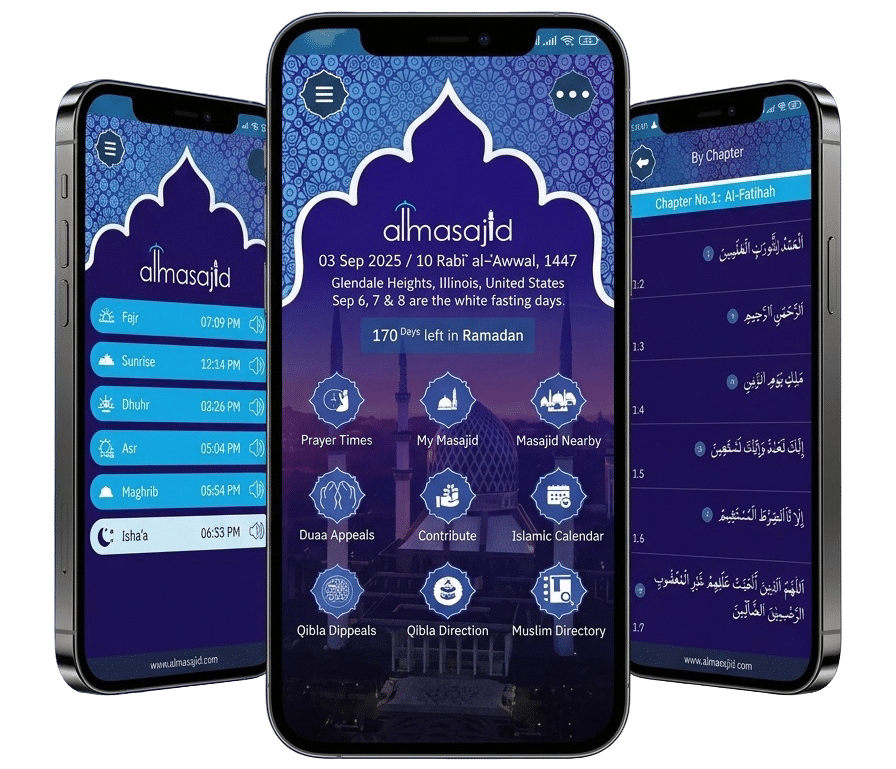
Stay connected with prayer times, Islamic calendar updates, Quran, duas, reminders, and your local masjid — all in one beautiful app.
Quran 9:36
"The number of months with Allah is twelve [lunar] months in the register of Allah upon the day He created the heavens and the earth; of these, four are sacred."
Resources / Useful Links
Get Salah Times Moon Sighting Duaas Salaat Last Will/Wasiat News Janaza Alert Events/Programs RegisterCopyright © 2026. All rights reserved | Disclaimer | Copyright Privacy Policy